Room by RoomChoosing Window Treatments for Every Room
Every room asks something different of its windows: privacy at street level, darkness for sleep, moisture resistance by the sink, glare control at a desk. These are starting points, not rules. Many rooms work best with a combination, such as a shade for light control with drapery or side panels for softness.
We confirm the right choice for each window at your consultation, based on its orientation, size, mounting depth and how you use the room.
Living Room
- Solar Shades
- Roller Shades
- Roman Shades
- Drapery / Side Panels
- Motorization
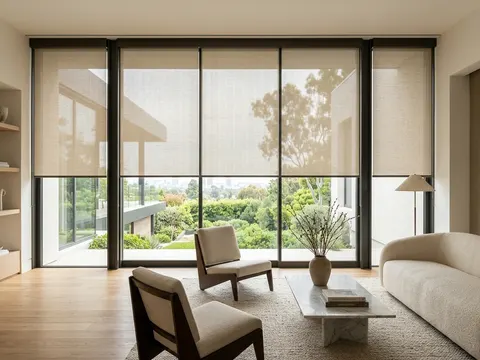
Solar or light-filtering roller shades manage daytime glare while keeping the view; add drapery or side panels for warmth and evening privacy. Roman shades suit smaller windows where you want a softer, tailored look.
Consider: Glare on TVs and screens, street-level privacy after dark, and grouping several shades on one motorized scene.
Bedroom
- Blackout Roller Shades
- Cellular Shades
- Roman Shades
- Drapery
Blackout roller or cellular shades darken the room for sleep; pair them with drapery for fuller coverage and a softer finish. Roman shades with blackout lining combine darkness with texture.
Consider: Light gaps at the edges of inside-mounted shades; an outside mount or layered drapery reduces them.
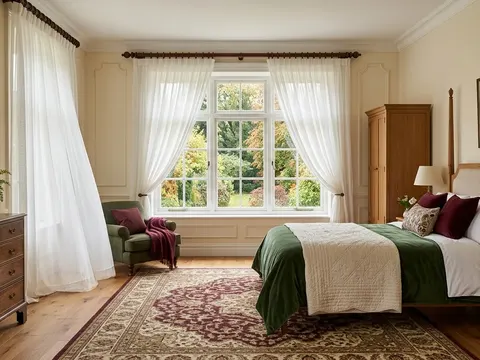
Primary Bedroom
- Blackout Roller Shades
- Drapery
- Roman Shades
- Motorization
Layering works well here: a blackout shade behind ripple fold or pinch pleat drapery gives darkness and a finished look. Motorization lets everything open on a wake-up schedule.
Consider: Large or multiple windows, matching fabrics across walls, and wiring for hardwired motors if you are renovating.
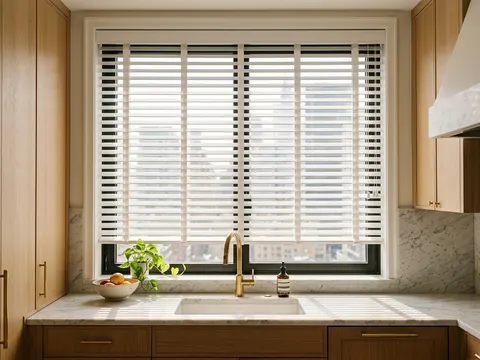
Kitchen
- Roller Shades
- Solar Shades
- Faux Wood or Aluminum Blinds
Roller and solar shades keep a clean line above counters and are easy to wipe; faux wood and aluminum blinds handle steam and splashes and tilt for light control.
Consider: Moisture and grease near the stove and sink, clearance above faucets, and windows that are hard to reach behind counters.
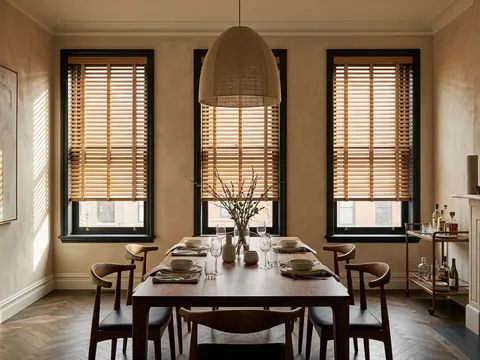
Dining Room
- Roman Shades
- Drapery / Side Panels
- Wood Blinds
- Solar Shades
Roman shades or wood blinds add warmth and character; drapery or side panels frame the room. Solar shades help if the table gets direct afternoon sun.
Consider: Fabric fading from strong sun, and coordinating fabrics with upholstery and adjoining rooms.
Bathroom
- Faux Wood or Aluminum Blinds
- Roller Shades
- Cellular Shades
Faux wood and aluminum blinds stand up to humidity and tilt for privacy with light. Roller or cellular shades in suitable fabrics give privacy with a soft look.
Consider: Steam and humidity (avoid real wood), privacy at all hours, and frosted or textured glass that may already give partial privacy.
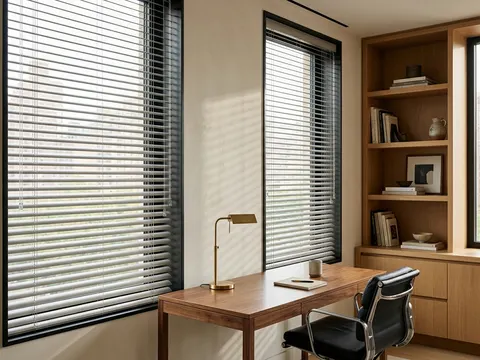
Home Office
- Solar Shades
- Roller Shades
- Blinds
- Motorization
Solar shades cut screen glare while keeping daylight and the view; blinds let you tilt light away from monitors. Motorized shades can lower automatically when the sun reaches the desk.
Consider: Window orientation relative to your desk and screens, and video-call backgrounds.
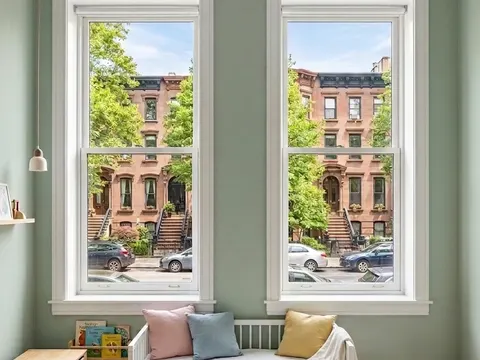
Nursery / Kids Room
- Blackout Cellular Shades
- Blackout Roller Shades
- Drapery
- Cordless or Motorized
Blackout cellular or roller shades help with naps and early mornings; layered drapery softens the room and adds darkness.
Consider: Cord-free operation for safety, durable and easy-clean fabrics, and blackout that still allows a soft glow if preferred.
Media Room
- Blackout Roller Shades
- Drapery
- Motorization
Blackout roller shades with layered drapery give the darkest result; motorization ties them into your lighting and AV scenes.
Consider: Side light gaps (outside mounting and cassette, fascia or pocket solutions can help, depending on the window and installation), sound softening from drapery, and control integration.
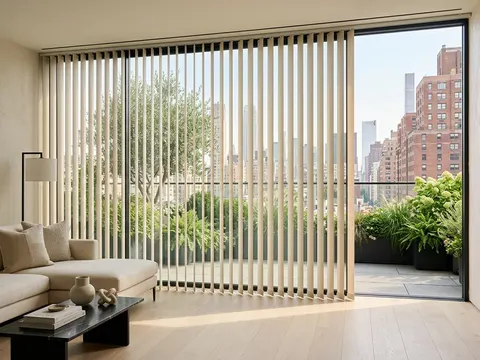
Large Windows / Sliding Doors
- Solar Shades
- Roller Shades
- Ripple Fold Drapery
- Vertical Blinds
- Motorization
Wide roller or solar shades, coupled or split across the opening, keep a clean line on large glass; ripple fold drapery or vertical blinds draw aside for doors. Motorization makes heavy or wide treatments easy to operate.
Consider: Door handle clearance, stack space at the sides, maximum shade width for the chosen fabric, and whether shades should be split or coupled.